From May 21 to 23, 2024, I was a guest at the “Deutsches Elektron-Synchronton” (DESY), Germany’s national accelerator center located in the North-East of Hamburg. It was established in 1959 and has contributed substantially to particle physics research over the decades, including in collaborations on the Large Hadron Collider at CERN. What is less known is that the library at DESY was also a pioneer in the documentation of the physics literature, particularly that of preprints. As preprints are often considered as part of the so-called “grey literature,” such as reports or working papers, it was at the time highly unusual to include them in a formal bibliography of physics titles.

However, as I learned during my visit, the library recognized early on how vital preprints were to researchers in particle physics, it began publishing a bi-weekly “High-Energy Physics Index” (HEP Index) in 1963. This is what I learned from Dietmar Schmidt, who began working at the library in 1973, became the head in 1982, and retired in 2007, as well as from Antje Daum, who has been a librarian at DESY since the 1980s. Both were very kind in showing me around the site and displayed a sincere interest in my project.
The HEP Index was a biweekly publication, which contained bibliographies of recent preprints, conference proceedings, and conventional journal literature. The publication included extensive subject keyword, author, and report series indexes, which were a welcome way for physicists who consulted the publication to gain an overview over the research that was going on in their field across the globe, including names and institutions to turn to if they had specific questions. Essentially, this index was like the first abstracting service for the grey literature of preprints.
Subject keywords were assigned by physicists based on a keyword list regularly updated at DESY to map the field of research in high-energy physics. In its heyday, before the introduction of desktop computer publishing and networked communication in the 1980s, the HEP Index had more than 300 (mostly institutional) subscribers worldwide, as I learned from Schmidt. As one of the fastest and most complete forms of documentation of the physics literature – new issues came out every two weeks – it was a valuable information source in high-energy physics before the advent of arXiv or the INSPIRE online database.

Schmidt told me that what distinguished the efforts at DESY from existing ones to catalog the physics literature at SLAC or CERN at the time was, first of all, that the literature documentation was not restricted to preprints and reports, but covered “conventional” physics literature as well, i.e., journal papers, conference proceedings, and (text) books. Second of all, literature documentation at the DESY library was computerized from the very beginning. Schmidt, who studied physics at the University of Hamburg, was employed in part because he possessed expertise in computer programming. When he joined DESY in 1973, he said that the first task Kurt Mellentin, then director of the library and documentation service, gave him was to “rewrite the existing programs for literature documentation – correction programs, print programs for the HEP Index – which were all coded in IBM Assembler, into PL/I,” which took him one and a half years. Schmidt also mentioned that PL/I was introduced, “because it enabled fine word processing [schöne Textverarbeitung]” and that it was in use until the mid-1990s, when Unix systems took over.
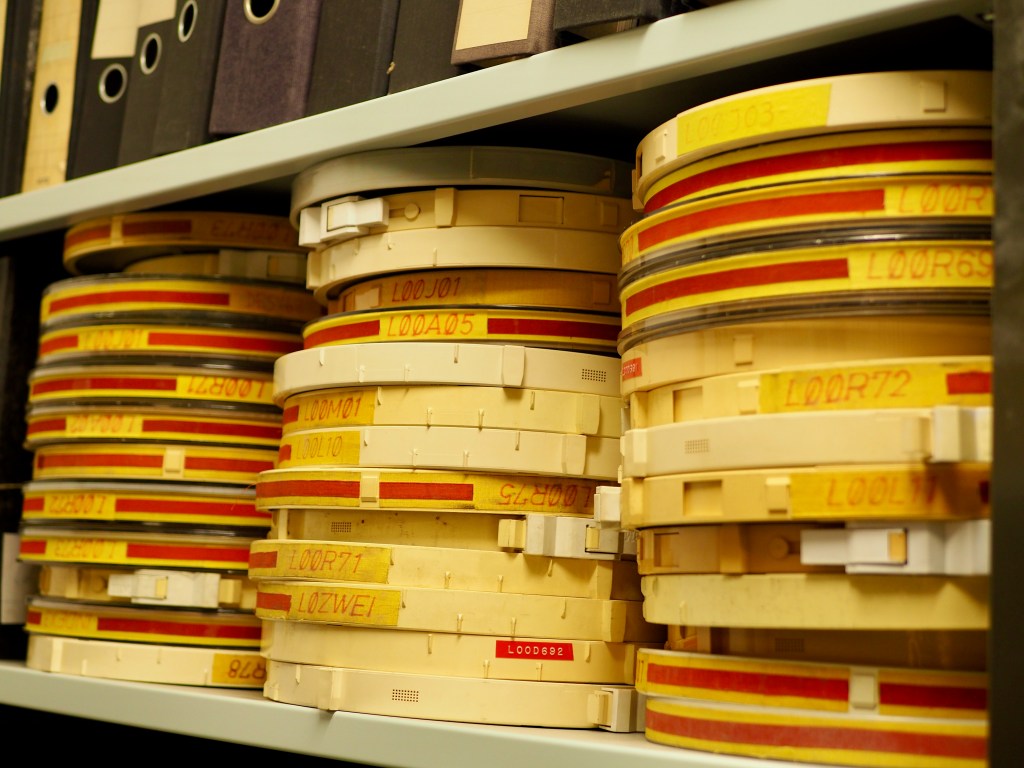
Compiling the HEP Index required not only bibliographic skills, but also a considerable expertise in high-energy physics. For this reason, many who worked on making the Index were (former) physicists now working in the library and documentation service. Physicists, active in one of the many of DESY’s research groups, were also regularly consulted for their understanding of the field. Compiling the Index for the bi-weekly publication was rather unconventional: the newest library acquisitions – journal issues and conference proceedings – were scanned “manually” for relevant titles to include in the index. Additionally, a system was established, similar to CERN and SLAC, in which authors would send their unpublished or submitted preprints to the DESY library. These, too, were reviewed for inclusion in the HEP Index.
The HEP Index had a further significance, not just as a bibliography of high-energy physics literature; it also contributed to the preprints and reports database at SLAC in California. Beginning in the early 1960s, the DESY library shared its cumulative database with the SLAC library, particularly for its lists of “conventional” publications. The magnetic tapes containing the bibliographic information were shipped across the Atlantic in exchange for tapes containing the preprints acquired at SLAC. This transatlantic connection eventually fed into the establishment of the global high-energy physics literature online database SPIRES at Stanford, which today is the INSPIRE website containing all the bibliographical information in the field. The HEP Index has thus contributed significantly to the normalization and formalization of preprints in the field, and therefore constitutes a crucial bibliographic instrument in the history of preprints.

